If You Could Read Their Whole Story
“There isn’t a person you wouldn’t love if you could read their whole story.”
— Marjorie Pay Hinckley
I have been thinking about this quote a lot lately, especially when I think about dementia care.
I will never forget “Jane.”
She was one of my residents in my early days of memory care. Extremely unkempt. To say personal care was a challenge was the understatement of the year. Brief changes, bathing, oral care, clean clothing – even washing her hands. EVERYTHING was met with resistance and swearing. It was so frustrating.
Until.
I reached out to her daughter to try and learn what I could to help problem-solve. And she shared that Jane had been the victim of assault. In a horrible way. I learned details that I will never get out of my mind.
I remember going into an empty apartment after that phone call and crying.
I saw Jane in such a different light. I saw her so differently.
I no longer saw her as an adult who should know better, who should just accept the help I was trying to give her. I saw her as a vulnerable child, terrified of touch or exposure.
It changed me.
And most importantly, it changed how I treated her.
I treated her with the gentleness of that vulnerable child. I became more intentional about how I approached her. I slowed down. I paid attention to my tone, my body language, and how I entered her space. I tried to give her a sense of safety and control wherever I could. I stopped seeing her resistance as something she was doing to me.
I won’t say personal care magically became a walk in the park after that. There were still hard moments. There were still times when she resisted. There were still days when I walked away frustrated and wondered what else I could possibly do.
But those moments became easier for JANE.
Because I understood something I hadn’t understood before.
She wasn’t trying to be difficult.
She was protecting herself.
And once I understood that, I could meet her differently.
And start figuring out what care needed to look like for her.
Because I knew her story. And that story changed everything.
I believe with all my heart that what we think about someone MATTERS.
Because what we think about someone dictates how we treat them.
What we think about a person influences how we approach them. It influences our tone of voice, our body language, our patience, our willingness to extend grace, and our willingness to look for the meaning behind simply what we see with our eyes.
And in dementia care – one of the most frustrating journeys of life – we have to choose what we think.
We almost have to firmly DECIDE what we think.
So often, we can think the person with dementia “is giving me a hard time.”
And that feels personal.
It feels like an attack.
It feels like someone is deliberately choosing their actions.
But when we shift to the thought that the person with dementia “is having a hard time,” it changes.
It reminds us of the reality that this person is living with brain loss, with fear, with confusion, with loss of abilities, with a world that may no longer make sense, and with so many things they may not have the ability to communicate. It shifts us toward compassion.
I often wonder – and not just in dementia care, but in life in general:
What if we could read the whole story of the person standing in front of us?
What if we knew everything that had happened to them from the moment they were born until this very moment?
What if we knew the people they had loved and lost, the things they had overcome, the disappointments they had carried, the pain they feel, the moments that shaped them, the regrets they hold?
What if we knew the stories they never told anyone at all?
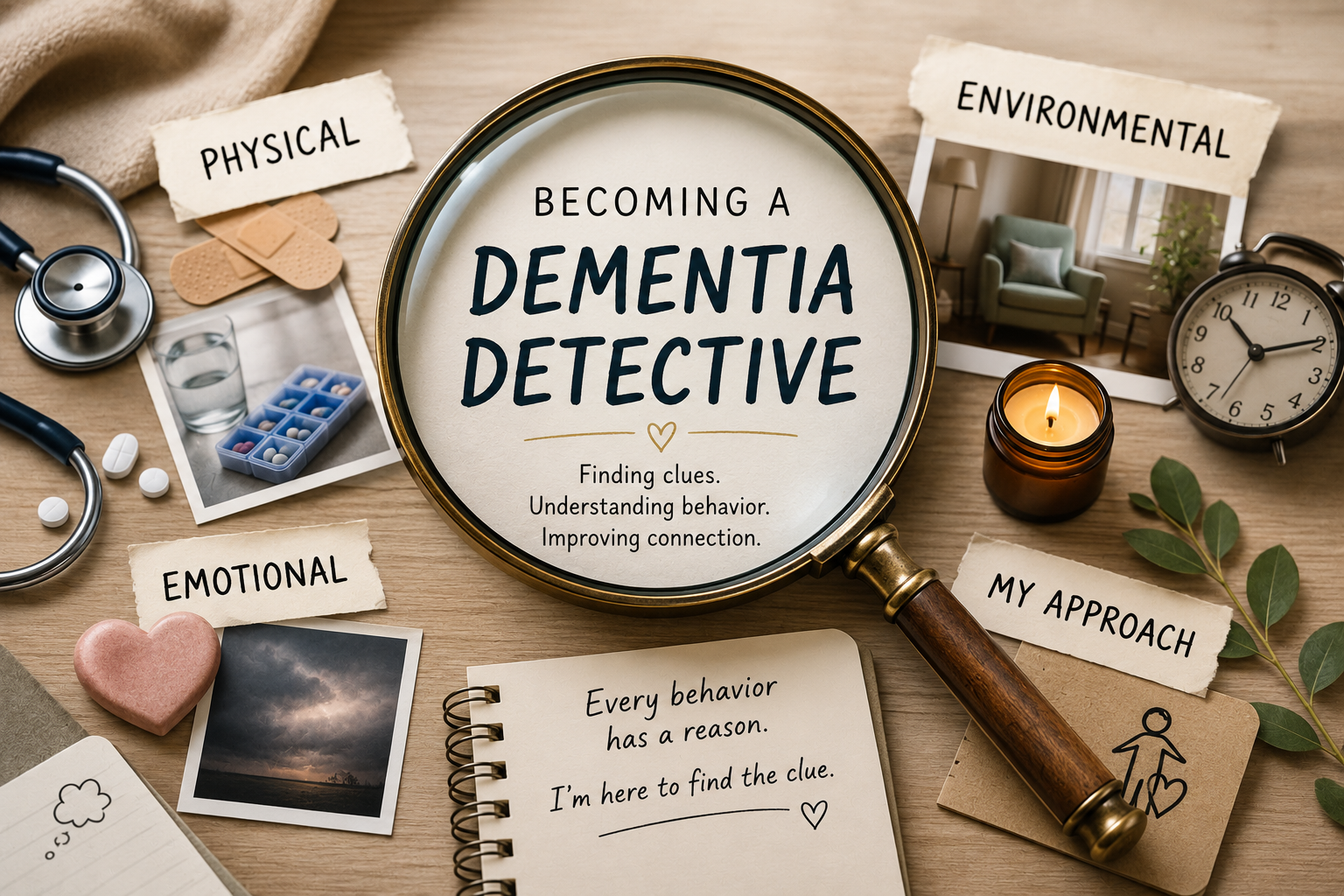
I think about this often when we call something a “challenging behavior.”
The truth is, a person living with dementia may be trying to communicate things that are incredibly important, but no longer have the words to tell us.
They may be in pain. They may be hungry or thirsty. They may need the restroom. They may be sick, tired, frightened, overwhelmed or simply uncomfortable.
And then there are the things of the heart.
They may be grieving. They may feel lonely. They may be afraid. They may be depressed. They may not understand where they are or why someone is trying to help them. They may be longing for purpose. Or for someone they love.
And there may be things even deeper than that – things they may never have shared with anyone, even before dementia.
Experiences of trauma, abuse, neglect, loss or heartbreak can remain part of someone’s story long after the details are forgotten.
And when something in the present triggers one of those experiences, the person may not be able to tell us what happened or why they suddenly feel unsafe.
We may only see the reaction.
This is why I believe so strongly that what we think about someone matters.
The person hasn’t changed.
But the way I see the person has changed.
And when the way we see someone changes, the way we treat them changes too.
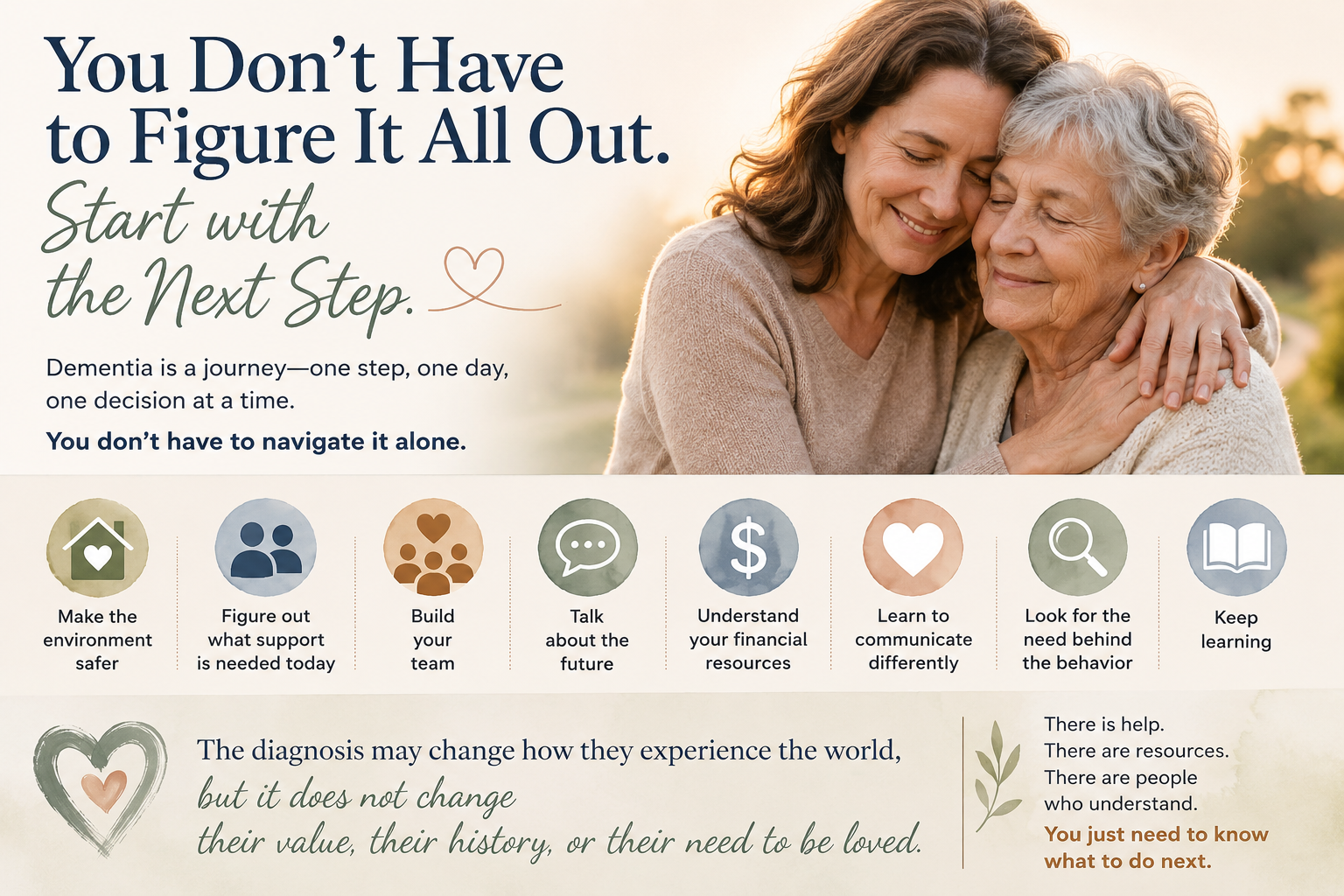
I think this is one of the most important decisions we can make in dementia care: deciding, even when our feelings tell us otherwise, that the person with dementia is doing the best they can with what they have in this moment.
That doesn’t mean every situation is easy.
It doesn’t mean we will always understand what is happening or know exactly what to do.
It doesn’t mean we won’t become frustrated.
We are human, too.
It simply means that when the moment is difficult, we try to remember that there is a whole person underneath what we are seeing.
Perhaps instead of asking, “Why are they doing this?” we can become a little more curious.
What are they trying to tell us? What might we be missing? What might be happening beneath what we can see?
So perhaps dementia care begins with a decision – not to understand everything, but to believe there is always more to the story than what we can see.
When someone is difficult, there is more to the story.
When someone is resistant, there is more to the story.
When someone is angry, frightened or overwhelmed, there is more to the story.
And when we remember that, we have a better chance of seeing the person instead of simply seeing the behavior.
We don’t have to wait until we feel compassionate to begin.
Sometimes, compassion starts with a decision:
This person is doing the best they can.
Because if we could read their whole story, perhaps we really would love them.
And in dementia care, when we cannot read the whole story, perhaps the most loving thing we can do is remember that there is one.