Category: Understanding Dementia

hands
Emotional & Spiritual SupportFamily SupportPersonal Stories & TestimoniesUnderstanding Dementia

The Power of Yes: How I Learned to Step Into My Mom’s World

Who knew the 2016 Summer Olympics could help me figure out how to communicate with my mother.

I’ll get to that, but first, a little background.


My mother and I have never seen eye-to-eye and were great with arguments and eye rolls. When she was diagnosed with Alzheimer’s Disease around 2009, it got even harder. If you are reading this, I know you get it. Getting the same questions over and over again is exhausting, annoying, and infuriating. If you haven’t figured it out yet, the absolute worst thing you can do is say, “Mom, I just told you that three times in the last hour.”

Yep, trust me—it won’t work.

If your father (her husband) is an uber-high Type A and was in management his entire life, not having her remember or do what he said is also unpleasant.

My mother’s name was Fran. She stood 4’10½” at her tallest and weighed in at a solid 95 pounds for most of her life. She was a bundle of energy. She taught high school, and big football players cowed to her. Needless to say, she could hold her own and send you running with “that look.” She always said ‘dynamite comes in small packages,’ and Little Frannie proved that.

Fast forward to 2016.

She was hospitalized for something, probably an extreme UTI. While she was in the hospital, she was asking me about her friend Eustacius and whether she had decided to buy the house. I thought to myself, ‘who the heck is Eustacius, and what house are you talking about?’
I just kind of said I hadn’t talked to her and we moved on.
That was my first experience with Hospital-Induced Delirium. The National Institutes of Health defines it as “a temporary but severe form of mental impairment that can lead to longer hospital stays and negative long-term outcomes, commonly acquired by elderly patients in acute care settings. Up to a third of patients 70 years old and above experience delirium, and the rate is much higher for those in intensive care or undergoing surgery. Until recent decades, hospital-acquired delirium, which typically lasts anywhere from a couple of days to several weeks but can even last months, was chalked up to old age and not considered a condition to be prevented or treated.”
In layman’s terms, I would say it is like the “crazy” that comes with a UTI but multiplied maybe tenfold. In my experience, it cleared up the minute we got her out of the hospital environment.

Now, as to how the Olympics helped.

There was some controversy going on with the U.S. Swimming Team at the Rio Summer Olympics. Mother was in a rehab facility after the above-mentioned hospitalization and had a roommate who listened to the Olympics all day and night. This ended up burrowing into Mother’s head, and she felt certain the police were coming to arrest her because of some party and the damage that was done. She wanted to know
what my husband thought. I told her he knew nothing about it. I told her it was no big deal and I hadn’t seen any police around, so I was sure she didn’t need to worry.
After about three days, I finally walked out of the room for a little while and went back in and told her I checked with the nurses. They told me the police said they arrested the culprits and didn’t need to talk to her.

That was that. She was satisfied with that answer.

That was the moment when I realized that you need to get into the world of someone with dementia.

We feel so bad “lying” to our parents and loved ones, but we call it “situational fibbing” and, in my opinion, it is 100% acceptable.  Think about it this way-Your loved one wants to go see their parents, who have been dead 20 years.  What do you say?  I always said they were on vacation for a couple of weeks.  Why would you tell them they are dead and keep getting them upset every 15 minutes?   I found out after she passed, when I started volunteering for the Alzheimer’s Association, that this is a key tip. Their reality IS reality. Meet them there. Have fun. I think of it like improv. Just go with what they are experiencing. I found through this that humor was a great way for us to connect. When she had a hard time saying a word, I would just say, “Well, that was easy for YOU to say,” and laugh. She would laugh and say, “Nope, not really.”

What I learned:
* You cannot control the situation.
* Get into their reality.
* Find some “canned” answers for those repetitive questions and use them until they don’t work anymore (a dementia patient will not remember you already told them.)
* Find a communication style that works for you and your loved one. Ours was humor.
* Find resources. There are so many good resources to use. Do not be afraid to ask for help.
* Take care of yourself. It’s like on a plane—put on your oxygen before you help someone else.

As frustrated as you get (you will and it is OK—it is a real emotion), remember that it is ultimately an honor to care for them and these are days and memories you will cherish.
sb1
Understanding DementiaWorking with Dementia

Bringing Memories to Life: Shadow Boxes for Memory Care

Shadow Boxes

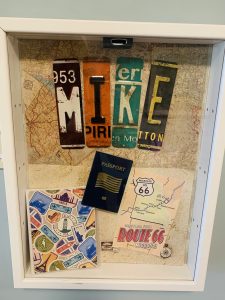
A shadow box is more than just a collection of items—it’s a window into a person’s most cherished memories. Filled with meaningful keepsakes, photographs, and mementos, it tells the story of a life well-lived and can encourage them to keep going.

For those experiencing memory loss, a shadow box can be a powerful tool. It not only serves as a visual reminder of their past but also enhances their overall well-being and supports meaningful interactions with caregivers and loved ones. Whether your loved one resides in a senior living community or at home, a memory shadow box can make a significant impact in their daily life.

I’ve had the privilege of creating many shadow boxes for Memory Care residents, and I’d love to share what I’ve learned to help you create one for someone special.

Step 1: Gather Information

Before you start, take time to learn about the individual’s life. Using a social profile, life story questionnaire, or personal interviews, gather details about their interests, hobbies, career, favorite places, and important life moments. This will guide you in choosing the most meaningful items to include.

Step 2: Choose a Style

There are two primary approaches to designing a shadow box:

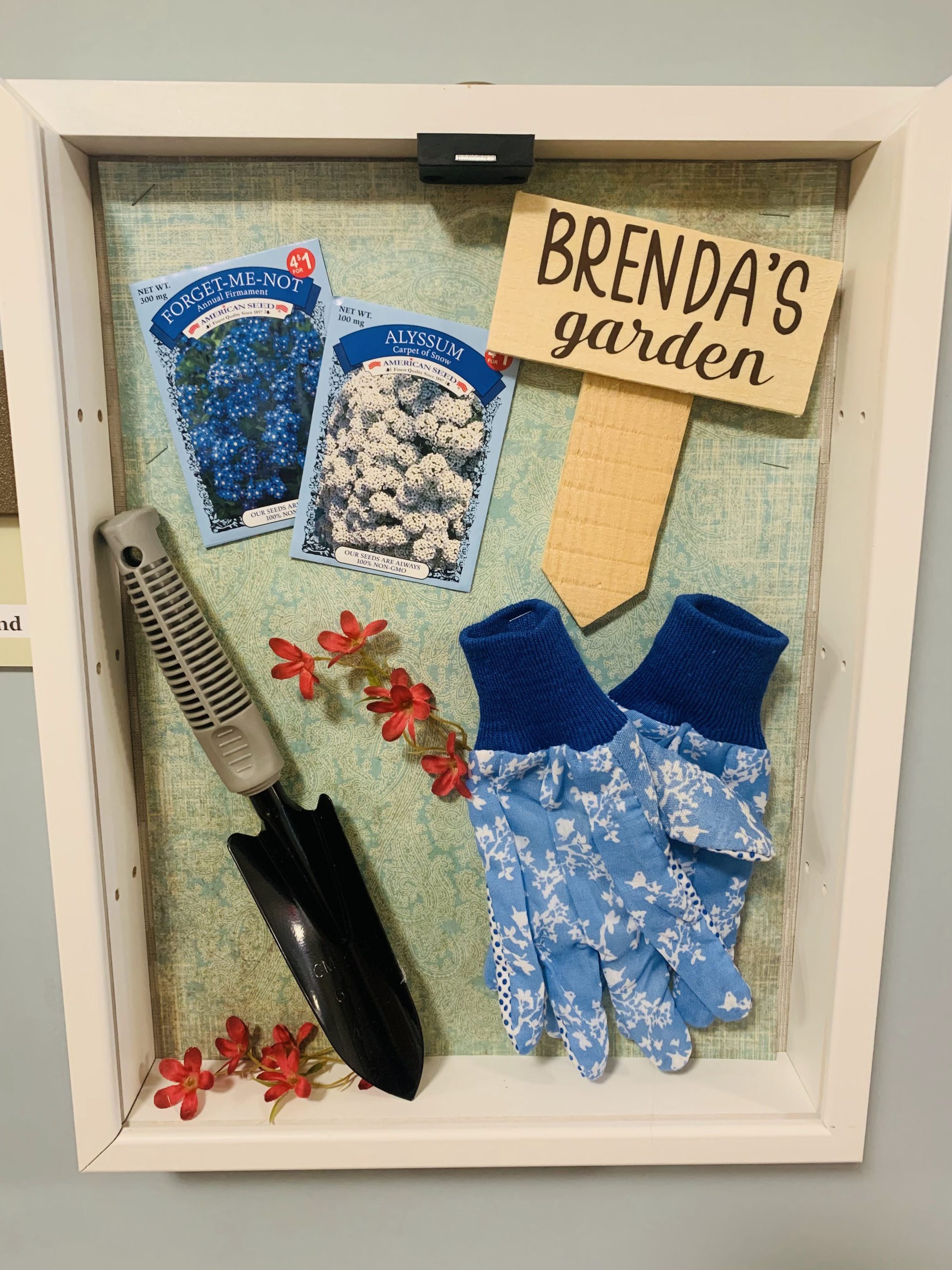
Themed Shadow Box – Center the design around a specific aspect of their life, such as their career, a favorite sports team, a beloved hobby, or a passion they held dear. This creates a cohesive and visually appealing display.

Collage-Style Shadow Box – Incorporate a mix of items from different parts of their life, creating a rich, varied representation of their experiences. This approach highlights multiple parts of their personality and journey.

Step 3: Select Items for the Shadow Box

Once you’ve decided on a style, start gathering meaningful items. Consider including:

Their name (large and visible)

Photographs of family, friends, and significant life moments

Small mementos that hold sentimental value (ticket stubs, medals, fabric swatches, keychains, etc.)

If you’re looking for more items to fit the theme, don’t hesitate to shop for extra pieces that may complement the collection. I’ve found many of the items pictured below at Dollar Tree, Hobby Lobby, and Walmart.

Step 4: Choose the Right Size and Location

The size of the shadow box will depend on where you plan to display it and what you plan to put in it. If your loved one lives in a senior community, check for any guidelines about hanging shadow boxes. The ideal placement is just outside their door—it serves as a helpful visual cue to identify their space and creates an opportunity for engagement with caregivers and visitors.

Shadow boxes can be found online or at craft stores. While you’re there, grab some scrapbooking paper for the background!

Step 5: Assemble the Shadow Box

Now comes the fun part—bringing it all together! Use a hot glue gun or strong adhesive to securely attach each item to the scrapbook paper while keeping everything visible and easy to appreciate. Arrange the pieces thoughtfully, making sure they tell a clear and meaningful story.

In Conclusion

What I love most about creating shadow boxes is the reminder that behind every collection of items is a remarkable person—a person who has lived, loved, and made countless memories. These moments deserve to be honored and remembered, and through shadow boxes, we can help bring those memories to life.

If you’d like a custom shadow box created for your loved one, I’m available to craft a personalized memory box that tells their unique story. Feel free to contact me for more details and pricing information at RachelMattSheehan@gmail.com.

senior delusions
Understanding Dementia

Dementia Behaviors 101

One of the greatest difficulties in caring for someone with dementia are the behavior changes that can – and often do – occur. People living with dementia often behave in ways that can feel incredibly challenging, leaving us as caregivers bewildered and unsure how to respond..

Why do behaviors occur?

Behaviors are typically communication of a need. Dementia can damage the part of the brain that controls the person’s ability to express their needs, wants, discomfort or distress through words. What we see as anger, aggression, etc., is quite often physical, emotional, or environmental distress that the individual is trying to communicate, but is unable to do so.

What we see as anger, aggression, etc., is quite often physical, emotional, or environmental distress that the individual is trying to communicate, but is unable to do so.

How to respond to challenging behaviors

Discover the need.

When a challenging behavior occurs, the first thing you can do as a caregiver is try to discover the possible need, beginning with physical needs. Check for the following:

  • Pain
  • Illness
  • Hunger/thirst
  • Restroom needs

Quite often taking the person to the restroom, resolving pain, or giving them a snack/drink will alleviate the distress. If it does not, check for the following environmental needs:

  • The individual feels too cold or too hot
  • They are wearing clothing or shoes that are too tight, or uncomfortable
  • The environment is loud/noisy
  • Glares or shadows

People living with dementia have difficulty controlling their emotions or expressing them in a reasonable way and may be experiencing:

  • Confusion
  • Frustration with a task that feels too complicated
  • Lonely/sad
  • Fearful or anxious
  • Angry or agitated

Behavior Basics

While every individual is unique, there are some basic guiding principles when responding to challenging behaviors.

Approach the individual in a calm, caring manner. Ensure they have seen you and you have connected with them before you touch them or enter their personal space. Touching someone with dementia when they haven’t seen you can startle them and escalate the behavior.

Don’t argue, correct or scold the individual. Remember, the behavior is not intention, it is communication of a need.

Join their reality. People living with dementia can be living in a reality very different than ours. They may be connected to a time frame in their early years. They may believe things that are not happening or see things that are not there. While your natural instinct may be to correct the person and try to drag them back into reality as you know it, it’s much more effective, comforting, and honoring to agree with them and validate their reality. While you don’t have to agree with the content that is being presented to you, you can agree that it is the individual’s truth – and validate their truth.

Agree with the person. Mirror back to them what they are saying. This will reassure the person that they have been heard and someone cares. “Yes, someone took your purse; I’m so sorry that happened” is far more effective than correcting them and saying, “You are imagining things, no one took your purse.”

Discover the need and meet the need. Check for physical, environmental, or emotional causes of distress and make the needed changes to restore the person to a feeling of calm and well-being.

Keep a behavior log. Try to identify possible triggers of behaviors and work towards prevention.

Use person-centered approaches; this means, knowing the person’s preferences, history, likes and dislikes – the things that calm them and the things that cause them distress.

Ways to prevent behaviors.

Although dementia related behaviors can’t be avoided altogether, there are things we can do to significantly lessen the frequency or severity.

Remain calm. Studies have shown that many behaviors could have been avoided by a using a calm, caring, and dementia aware approach. If you find yourself become frustrated, remove yourself from the situation.

Establish a daily routine that includes structured mealtimes, hydration, exercise and rest . By creating structure and predictability for the individual with dementia, you will minimize distress and ensure key needs are being met. Learn how to create a daily routine by clicking here.

Establish a restroom schedule. Guide the individual to the restroom every two hours. Not only will this lessen incontinence episodes – and therefore stress for you as a caregiver, but it will minimize discomfort and anxiety in the individual.

Maintain a calm environment. An environment that is loud or chaotic can quickly trigger a behavior. Learn more about creating a dementia aware environment by clicking here.

Reach out for support. Dementia is a challenging disease, and caregivers need the support of others who understand. Connect with a support group in your area, or a virtual support group. 

By responding with patience, empathy, and understanding, you can help make the journey of caregiving a little easier, both for you and for your loved one. Your care and compassion can make all the difference in their well-being.

older hands making a puzzle, memory exercises
Understanding Dementia

Understanding Dementia

Dementia is not a disease itself but a term for a group of symptoms caused by damage to the brain due to various diseases, such as Alzheimer’s. The symptoms vary depending on which part of the brain is affected.

Signs of Dementia

  1. Difficulty Completing Familiar Tasks
    While needing help with new technology or adjusting to unfamiliar environments is common with aging, struggling with tasks that were once easy can indicate dementia. You may notice:
    • Inability to follow a familiar recipe
    • Forgetting the rules of a familiar card or board game
    • Getting lost on the way to a familiar location
    • Difficulty completing daily tasks like laundry in the correct sequence
  2. Memory Changes Affecting Daily Life
    Minor memory lapses, such as forgetting to buy an item or an appointment, are typical with aging. However, when memory loss impacts daily activities, it may signal dementia. Common signs include:
    • Forgetting names or plans
    • Repeating the same questions
    • Forgetting important events or dates
    • Misplacing items and being unable to retrace steps
    • Unexplained weight gain or loss
    • Neglecting personal grooming habits
  3. Difficulty with Problem-Solving, Planning, or Money Management
    Occasional forgetfulness about paying a bill is normal, but someone with dementia may struggle with regular bills, problem-solving, or planning. Warning signs include:
    • Paying the same bill multiple times
    • Forgetting to pay bills on time
    • Inability to use correct currency denominations
    • Poor judgment or decision-making regarding money management
  4. Changes in Communication (Speaking or Writing)
    While occasional word-finding difficulties can be part of normal aging, dementia may cause more noticeable issues with communication. Symptoms include:
    • Repeating the same thing over and over
    • Using incorrect names for familiar objects
    • Difficulty understanding what others say or following conversations
    • Trouble reading or writing words

Changes in Mood, Personality, and Social Habits
While disinterest in social obligations can happen with age, someone with dementia may withdraw significantly from social activities. This is often a result of the cognitive changes listed above.

What to Do if You Notice Signs of Dementia

  1. Don’t Ignore the Signs
    • Recognizing these changes can be emotionally challenging and even frightening. However, it’s important not to ignore them.
  2. Keep Track of Observations
    • Document the changes you observe in a notebook or log. This information can be valuable when consulting with a physician.
  3. Consult a Physician
    • Make an appointment with a doctor to rule out other potential causes of memory loss and discuss treatment options.
  •  
  •