Daily Life & Caregiving
A Person’s Sensory Environment Impacts Everything
When a person living with dementia feels overwhelmed, overstimulated, cold, uncomfortable, confused, or unable to focus, it impacts nearly every aspect of daily life.
Years ago, when I was working as a Regional Memory Care Director, I remember the early days of COVID vividly.
Like so many senior living communities across the country, we received the directive that residents needed to remain in their apartments as much as possible in order to reduce exposure and keep everyone safe.
And collectively, memory care teams everywhere found themselves asking the same question:
“How do you help residents who cannot remember the rule… stay in their apartments?”
Because the truth is, people living with dementia were not wandering the hallways to “be difficult.”
They were often trying to meet a need:
comfort, connection, movement, familiarity, stimulation, or reassurance.
So one of our communities came up with an incredibly thoughtful idea.
The team recognized something important:
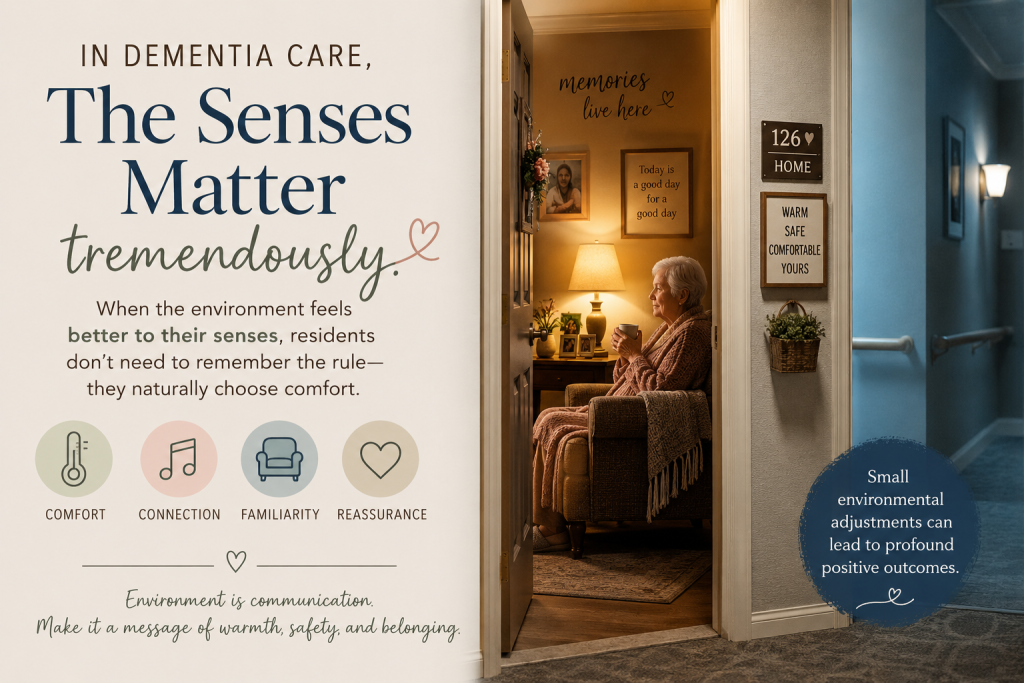
people naturally gravitate toward environments that feel comfortable to their senses.
So instead of relying entirely on redirection or repeated reminders, the community adjusted the environment itself.
The hallway temperatures were lowered slightly.
Resident apartments, meanwhile, were kept warm and cozy. Residents had familiar music playing, favorite blankets, meaningful personal belongings, comfortable seating, calming lighting, and person-centered items that reflected who they were.
And something remarkable happened.
Residents would open their apartment doors, feel the cool hallway air, and naturally choose to remain in the warm, comforting environment of their own apartment.
Not because they remembered the rule.
But because the environment itself felt better to their senses.
That moment stayed with me because it perfectly demonstrated something we do not talk about nearly enough in dementia care:
The senses matter tremendously.
Sensory comfort affects:
- direct care
- medication delivery
- activity participation
- dining experiences
- communication
- sleep
- focus and attention
- emotional well-being
Even something as simple as feeling cold can become a tremendous distraction.
If we are trying to help someone focus on eating, taking medications, participating in activities, or receiving care while their senses are overwhelmed, the brain may simply not be able to process everything successfully.
This is one reason dementia-friendly sensory environments are so important.
Sight: What The Person Sees Matters
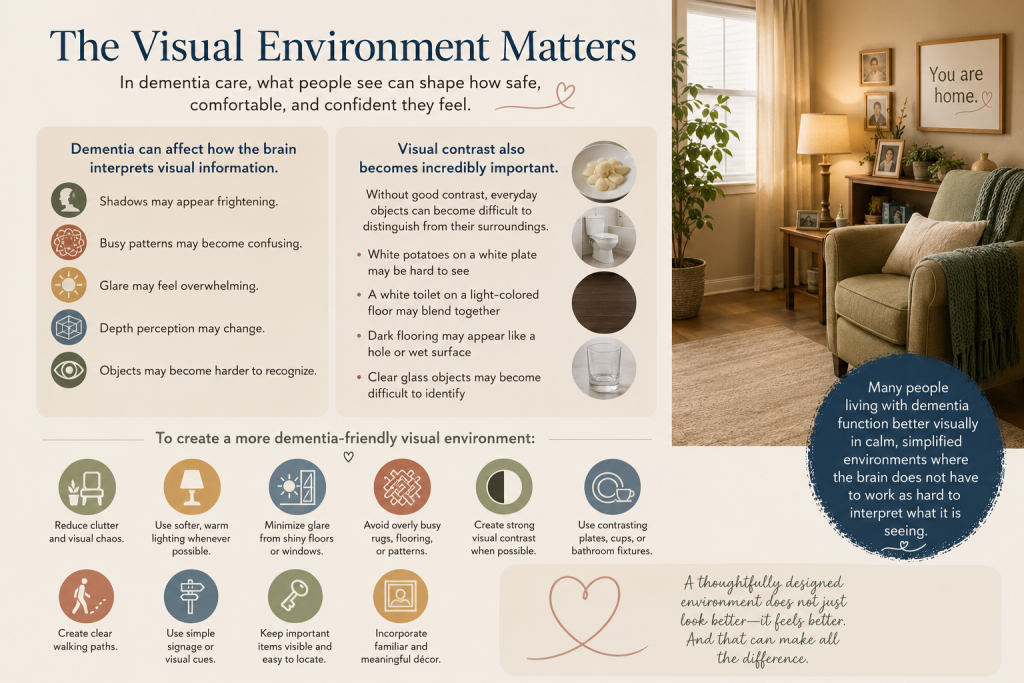
Dementia can affect how the brain interprets visual information.
- Shadows may appear frightening.
- Busy patterns may become confusing.
- Glare may feel overwhelming.
- Depth perception may change.
- Objects may become harder to recognize.
Visual contrast also becomes incredibly important.
Without good contrast, everyday objects can become difficult to distinguish from their surroundings.
For example:
- white potatoes on a white plate may be hard to see
- a white toilet on a light-colored floor may blend together
- dark flooring may appear like a hole or wet surface
- clear glass objects may become difficult to identify
To create a more dementia-friendly visual environment:
- reduce clutter and visual chaos
- use softer, warm lighting whenever possible
- minimize glare from shiny floors or windows
- avoid overly busy rugs, flooring, or patterns
- create strong visual contrast when possible
- use contrasting plates, cups, or bathroom fixtures
- create clear walking paths
- use simple signage or visual cues
- keep important items visible and easy to locate
- incorporate familiar and meaningful décor
Many people living with dementia function better visually in calm, simplified environments where the brain does not have to work as hard to interpret what it is seeing.
Hearing: The Brain Often Cannot Filter Noise The Same Way
One of the biggest sensory challenges in dementia care is noise.
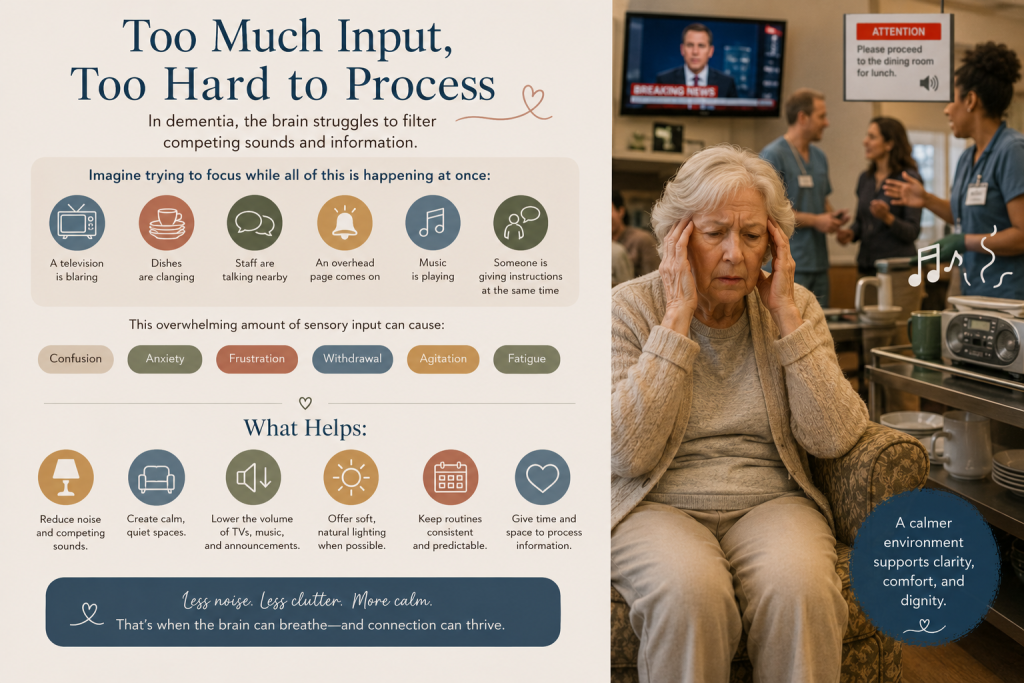
As dementia progresses, the brain may lose some ability to filter background sounds. This means every sound may compete equally for attention.
Imagine trying to focus while:
- a television is blaring
- dishes are clanging
- staff are talking nearby
- an overhead page comes on
- music is playing
- someone is giving instructions at the same time
For many people living with dementia, environments like this can feel mentally exhausting.
THE GOLDEN RULE:
NO COMPETING SOUNDS.
If music is playing, turn the television off.
If someone is trying to communicate, reduce background noise.
If residents are dining, avoid overwhelming sensory chaos whenever possible.
To create a more dementia-friendly auditory environment:
- lower television volume
- avoid multiple competing sounds at once
- reduce unnecessary overhead paging
- speak slowly and calmly
- allow quiet spaces throughout the day
- be mindful of loud dining environments
- use familiar music intentionally and thoughtfully
- reduce chaotic or rushed conversations around residents
Sometimes simply reducing noise can significantly reduce distress.
Temperature & Touch: Physical Comfort Is Essential
People living with dementia are often highly sensitive to physical comfort.
Something as simple as being cold, sitting in uncomfortable clothing, or feeling rushed during personal care can create enormous distress — especially when the person may no longer be able to explain what feels wrong.
And an important thing to remember:
If we are comfortable, they are likely cold.
Many older adults — particularly those living with dementia — are more sensitive to colder temperatures than caregivers or staff may realize.
To create more supportive sensory comfort:
- keep environments warm and cozy
- offer soft blankets or comforting textures
- avoid rushing care tasks
- pay attention to whether residents seem cold
- create comfortable seating areas
- use gentle approaches during hands-on care
- consider lighting and temperature during bathing
- recognize that physical discomfort may appear as “behaviors”
Many residents naturally gravitate toward spaces that feel physically safe and comforting to their senses.
Smell: Familiar & Comforting Scents Can Be Powerful

Smell is deeply connected to emotion and memory.
Certain scents may feel comforting and familiar:
- coffee brewing
- cookies baking
- flowers
- perfume
- fresh laundry
At the same time, overwhelming or unpleasant smells can increase confusion, nausea, discomfort, or agitation.
To create a more dementia-aware environment around smell:
- maintain good air circulation
- minimize strong chemical odors when possible
- use familiar comforting scents thoughtfully
- recognize that dining smells may stimulate appetite
- avoid overwhelming fragrances
- pay attention to how residents respond to different scents
Sometimes something as simple as the smell of fresh bread or coffee can help a space feel more welcoming, grounding, and familiar.
The Goal Is Comfort
At Dementia Life STL, we believe dementia-friendly environments are not about perfection.
They are about helping a person living with dementia feel:
- calm
- comfortable
- less overwhelmed
- more successful
- safe
- supported
- at home
When we begin looking at environments through the lens of the senses, we often realize just how much the world may be asking a person living with dementia to process every single day.
And sometimes, the smallest sensory changes can make the biggest difference.
Putting It Into Practice
Dementia-Friendly Environment Walk-Through: The Senses
As you walk through your home, memory care neighborhood, assisted living community, adult day center, or care setting this week, try viewing the environment through the eyes — and senses — of a person living with dementia.
Slow down.
Pause in each space.
And ask yourself:

Sight
- Is this space visually calm or visually overwhelming?
- Is there clutter, glare, or busy patterns?
- Are important items easy to see and recognize?
- Is there enough visual contrast between objects?
- Would someone know where to walk or where to sit?
- Does the lighting feel warm and comforting?
Hearing
- Are there competing sounds happening at the same time?
- Is a television on while music is playing?
- Are staff conversations creating extra noise?
- Would this space feel peaceful… or overwhelming?
- Is there anywhere quiet to rest or regroup
Temperature & Touch
- Does this space feel warm and comfortable?
- Would someone sitting still likely feel cold here?
- Are chairs comfortable and supportive?
- Are blankets or sweaters available?
- Does the bathing or shower area feel cold or clinical?
Smell
- Does the environment smell welcoming and familiar?
- Are there strong odors that could feel overwhelming?
- Could comforting scents be incorporated thoughtfully?
- Does the dining space smell appetizing and inviting?
Overall
- Does this space feel calm?
- Would I feel safe here if I were confused?
- Would I know what to do next?
- Would I want to stay here?
- Does this environment support comfort… or create stress?
Sometimes the smallest changes make the biggest difference.
A quieter dining room.
A warmer temperature.
Gentle sounds.
Reducing clutter.
Softening the lighting.
Slowing the pace.
Dementia-friendly environments do not happen accidentally.
They happen intentionally — one thoughtful change at a time.
Small Steps This Week
Choose ONE sensory change to focus on this week.
Maybe:
- reducing competing sounds during meals
- offering warmer blankets
- turning off a loud television
- improving lighting in a hallway
- simplifying a cluttered area
- creating a quiet rest space
- adding familiar music at calming times of day
Do not underestimate the power of small environmental changes.
Often, they are the very things that help a person living with dementia feel safe, successful, and at home.
Over the next few weeks in our Dementia-Friendly Environments series, we will continue exploring how to create environments that are safer, easier to navigate, emotionally supportive, and rooted in person-centered dementia care.

Because people living with dementia deserve environments that truly feel good to live in.